What is the California dream? A prospector finding gold, a Beach Boys soundtrack on Highway 1, a Stanford degree? The open road, the self-made man, young love in the sunlight and the sand?
The following is a study not of databases nor documentation, nor of influential men nor of the universal experience. Here collected are the longings of one family. For six generations my family has explored this state, put down roots and pulled them up again, built roads and driven long hours on midnight highways. These photographs, letters, and lyrics hold the last echoes of the great yearnings that moved my people across this state. These are their California dreams.
Aspirations shift, of course, one generation to the next; but some longings are passed down. Some hopes, fulfilled, become a child's character, a grandchild's inheritance, and the very identity of a child's grandchild.
1. Los Angeles County, 1866
At the close of the Civil War, great surges of America's broken, hopeful, poor, and bold started west. With the influx of settlers, Red Cloud's War broke out along the Bozeman trail. Apaches raided the southern wagon routes through Arizona. In the prebellum era, 75% of US military had been stationed west of the Mississippi River; now, those forces were depleted and located far from the western deserts. Especially in the years between the 1862 Homestead Act and the 1869 completion of the Transcontinental Railroad, the journey westward was a precarious one. The ox-wagon trek lasted up to nine months, and those months were thirsty, long, and uncertain.
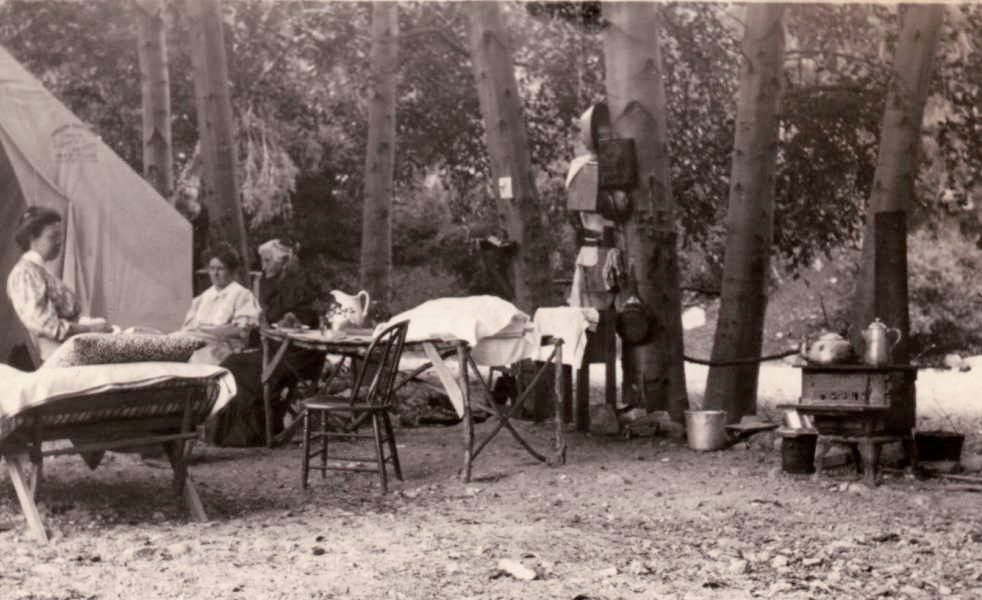
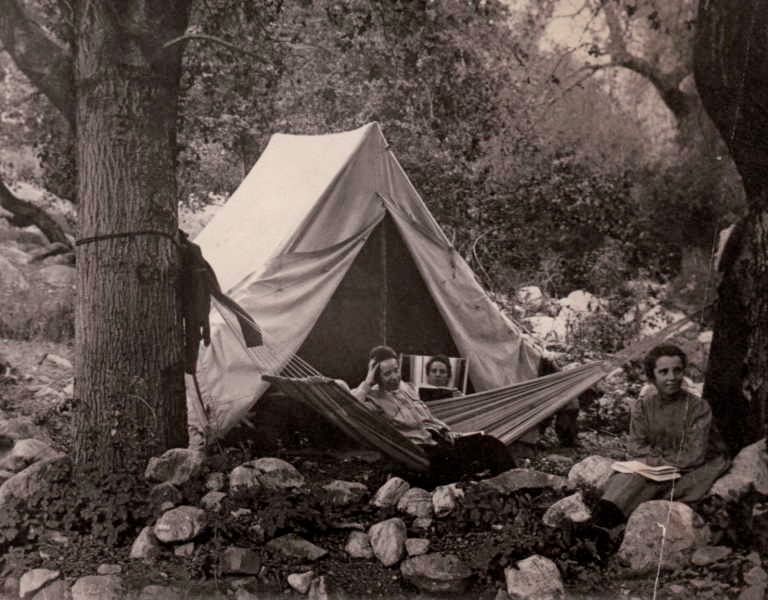
The Hutchinson and the Cole families migrated from central Texas to Los Angeles in 1852, 1866, or 1871, depending on one's sources. Alfred Cole and Martha Hutchinson met on the trail, married upon their arrival, and lived out the next six decades on a 40-acre farm in Santa Ana. When the families first arrived on their claims, they lived in tents, cooked outdoors, and made a living room of the forest.
It's little enough we know of the women in these photographs – the young girl may have been a Martha Hutchinson or any one of her eight sisters. Yet I recognize what it is these women prize: such things as order, affection, and foritude. Some ways of life, some aspects of a family culture, are more durable than memory or steel or the written word.
What trickles down
The commandments say
That punishment tumbles down to the third generation
Like a sharp boulder in the rain,
But love endures to the thousandth child
Like rain collected into gathering streams
And strong, still rivers.
The good lasts long.
It has reached me from the wildflowers
On the rough-cut table
Of a camping kitchen
In 1866.
I see it in the smiling watchfulness
Of an ancestor my age,
Who sits on a stone with an open book.
Her kind of quiet does not concern itself
Over her ruffled dress
Or the camera’s gaze.
In a newer photo, one that catches the blue of denim and sky,
My aunt sits on a granite slab
With her forearms on her knees
And a pistol in her hands.
She’s shooting pinecones as they float downstream.
Youth poises in her shoulders
And sweeps her hair back in the sun.
The loving mountain women, we last long.
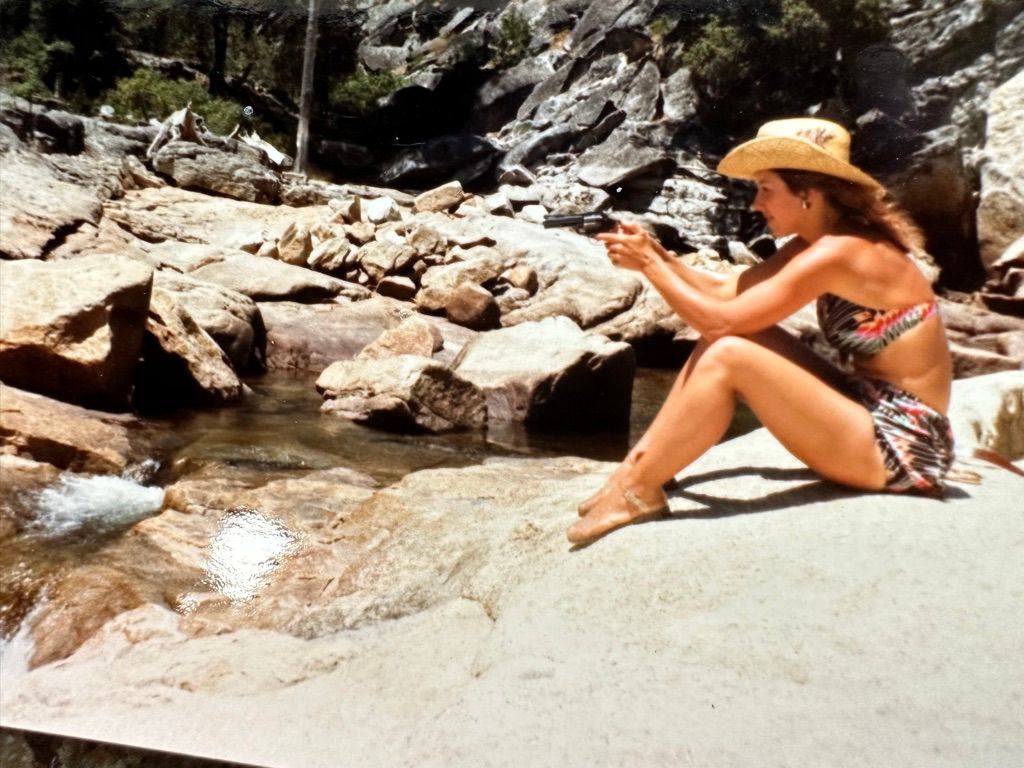
Kathryn Best Frank, somewhere in the Sierra Nevadas
II. Holtville, 1916
In 1912, the Los Angeles Examiner declared an automobile race in order to determine the shortest route from Southern California to Phoenix. A San Diego businessman hitched horses to his car and dragged it through the Mojave Desert, arriving well ahead of the other competitors. The feat convinced local governments, businesses, and volunteers to build a road over his route. For the six-and-a-half miles where the construction of a pavement road was made impossible by the shifting Algodones Dunes, the road was built of planks. The route was completed in 1916, to much acclaim, and it ushered settlers and sight-seers into the San Diego region.
My great-great-grandfather, Frank Best, worked on the road's construction or maintenance crew, or possibly both. Remaining in Holtville, he opened Best Feed and Fuel. Beside a few more names and dates that have lost their stories, that is all that is known of the man.
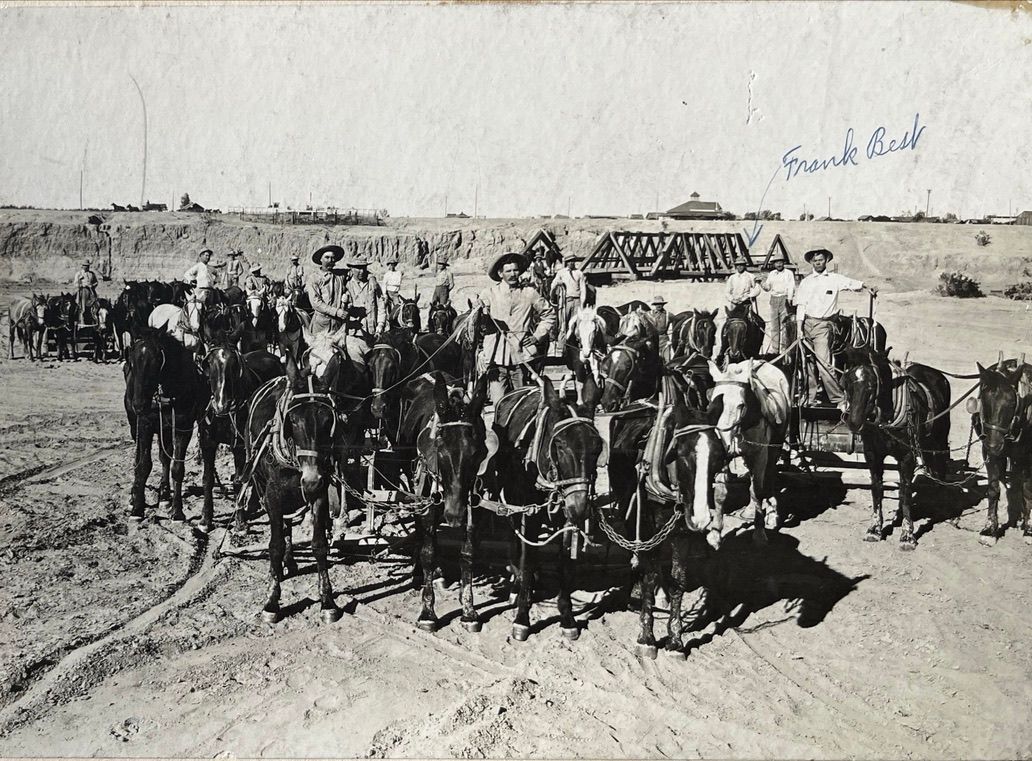
Holtville ca. 1916. Note made by Harold Best in the 1970s.
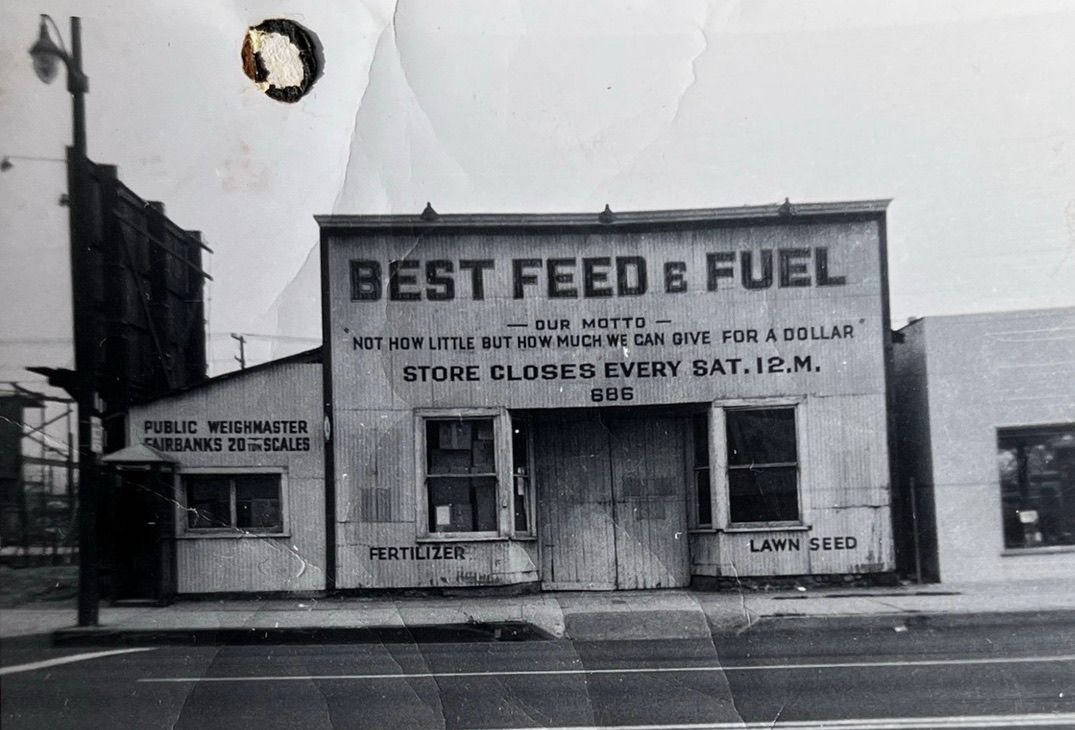
Frank Best's store in Holtville. Date unknown.
Building on the Sand
Among the silent-footed mules
poses a foreman with his hat tipped back,
hand on his hip,
who holds the lead-team lines.
Another chap with large moustaches
has thrown his arm
about a wider, shorter man.
He's jaunted south for the sheer audacity
of laying miles of planks
that men might roll across the desert dunes.
Characters, these gentlemen were.
But the flat-brimmed, dark-tanned,
tight-lipped man there waiting at the rear,
what caused him to join this exhibition
of ecstatic foolery?
In this time of serious photography
his jaw is set more firmly than the rest.
Yet his hands are calm,
and he leans easy on the lever
of his sand-scraper.
(His grandson's grandsons stand that way,
and I can say from watching them
that stillness and strength together
make a man beautiful to behold.)
This photograph and a life motto are all that remain,
an echo of the life of a man.
He built a road in a forlorn place,
and he gave as much as he could for a dollar.
He could not have known the seekers
and silent ambitions
that would bounce to San Diego
along this rough plank road,
nor the sand that would sift across his work,
nor how his children's children would drift
across and out of and back again
to this state of dreams.
No, he could not know what legacy
his blistered hands would leave.
Yet still in those shoulders
and the pulled-low hat
there's a certain confidence,
a quietness in carrying one's cause –
and that alone has survived the sand,
not through a photograph only
but in flesh and living eyes.
I know, I know this man.
III. Placer County, 1930
California may have been born in eagerness: "room for millions," "a climate for health and wealth," "without cyclones or blizzards," as the train advertisements boasted. The state's entrepreneurial spirit was brought into strength, though, by the desperation of the Depression. 758,521 migrants came to the state between 1935 and 1940, almost half of these hailing from the Dust Bowl states. California's agricultural sector boomed, in part due to the abundant labor, but with low food prices, intense competition from large farms, and low wages, many "Okies" could hardly get by as farmers or farm-laborers.
Harold Best, Frank's second son, took out a loan to purchase an orange orchard in Placer County in February 1929. In October the stock market crashed, and in March the orange blossoms froze. He had a wife, a six-year-old daughter, and a three-year-old son.
It is not clear how the Bests provided for themselves throughout the Depression, but 1939 found them gold panning on a river in Placer County. They had a curtain for a door, and the children only wore shoes on Sundays. Yet Harold, in spite of their poverty, did not bring every ounce of gold to market. With some he made a ring which, judging by its weight, must be near solid gold. Perhaps, more than a warm house or good clothing, his wife needed a promise. There's more to entrepreneurship than need or profit motive; and the heedless hopefulness that makes, and sometimes breaks, a business may put life into a marriage vow.
As I sifted through the papers of my great-grandfather’s life,
I came across one envelope in a different hand,
that of his wife.
Seven documents Evelyn had saved.
Four were certificates: of graduation, marriage, teaching, health.
Then came two letters of recommendation, on faith of which
she left her job in Imperial for a husband in Pasadena.
The last paper was labeled,
'My own father's
My only gift from him.'
The worn greeting card read 'To Evalyn from Papa,'
and 'A holy and peaceful Easter.'
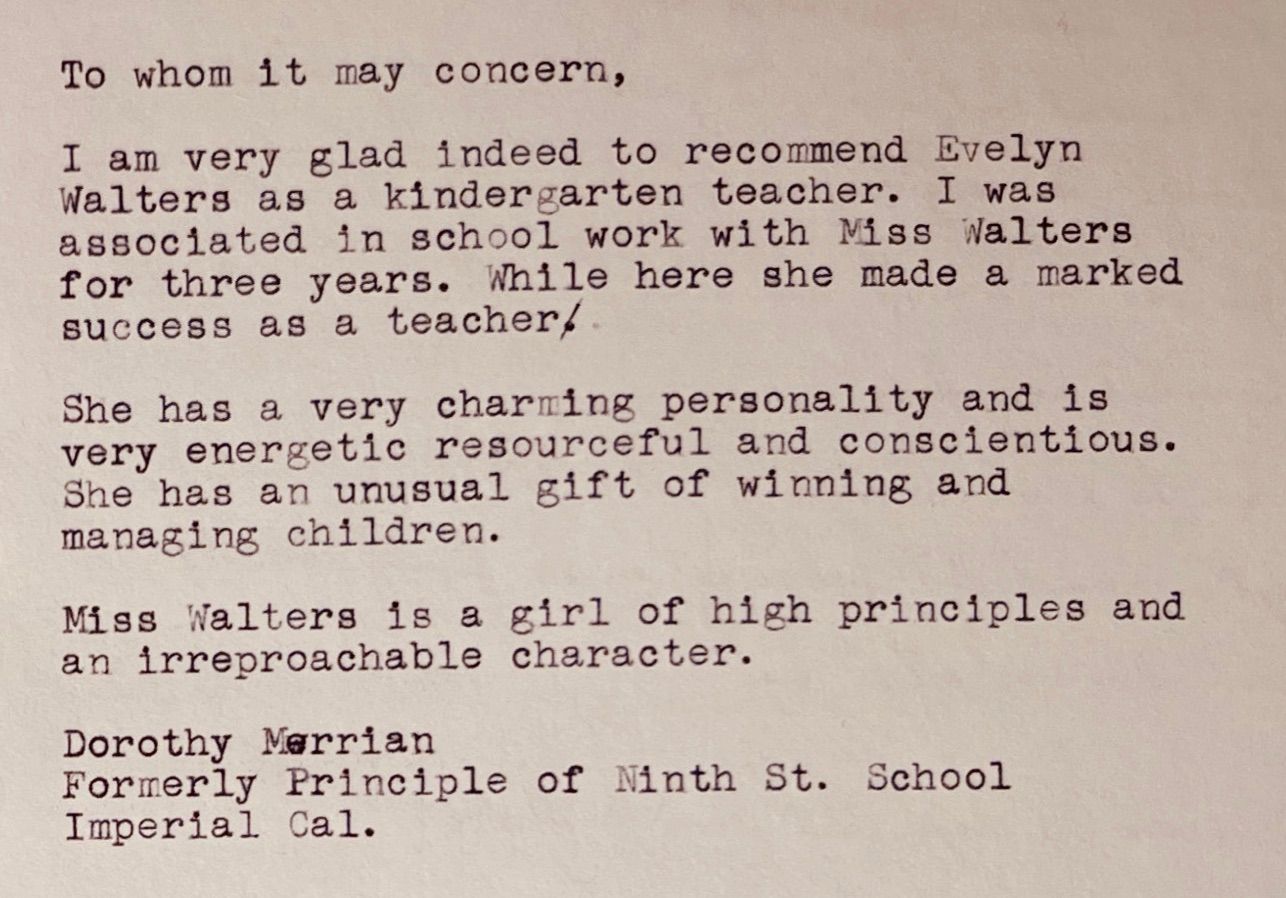
Copy of Evelyn's ca. 1921 letter of recommendation
If only two documents could testify to the contents of my days,
what better than the words of women who had watched me work
through war strain and the Spanish flu,
and would speak of my sympathy with a child?
If only one gift remained from a father who died young,
what better gift than holiness and peace?
I realized then that this Evelyn
was the shadow in all the stories.
She withstood the death of the orange grove dream
by Depression prices and northern frost.
She heated water for the once-weekly bath
on the mining claim,
and straightened the collar of a thirteen-year-old son
as he went out, weary,
to guard the gold operation through the night.
She was the one who stopped receiving letters when that son,
wrote to a girl instead, yet welcomed that girl on family camping trips
when he was off at sea.
This was the couple that took road trips to Mexico
before the days of free government and frequent gas.
From one of their trips came the small stone donkey that sits on my shelf
and that I have loved since a child.
Their house is the one my mother remembers for its warmth,
its gates that were good for swinging,
its laundry shoot made for mischief.
And Evelyn – Evelyn is the woman
on Stanford’s White Plaza
who had filled her hands with orange blossoms.
I found her will, as well, in that box,
and she left a third to ministry.
But her last testimony to the gospel of peace
has nothing to do with dollars or deeds.
I suspect of this woman
a quiet faithfulness,
faithfulness through two world wars
and Vietnam, through fifty years
of marriage to a man with more invention
than acumen for business.
If only I might inherit this devotion,
and leave it also as my legacy.
Sweet woman, bold woman,
I claim your earthy, simple dream.
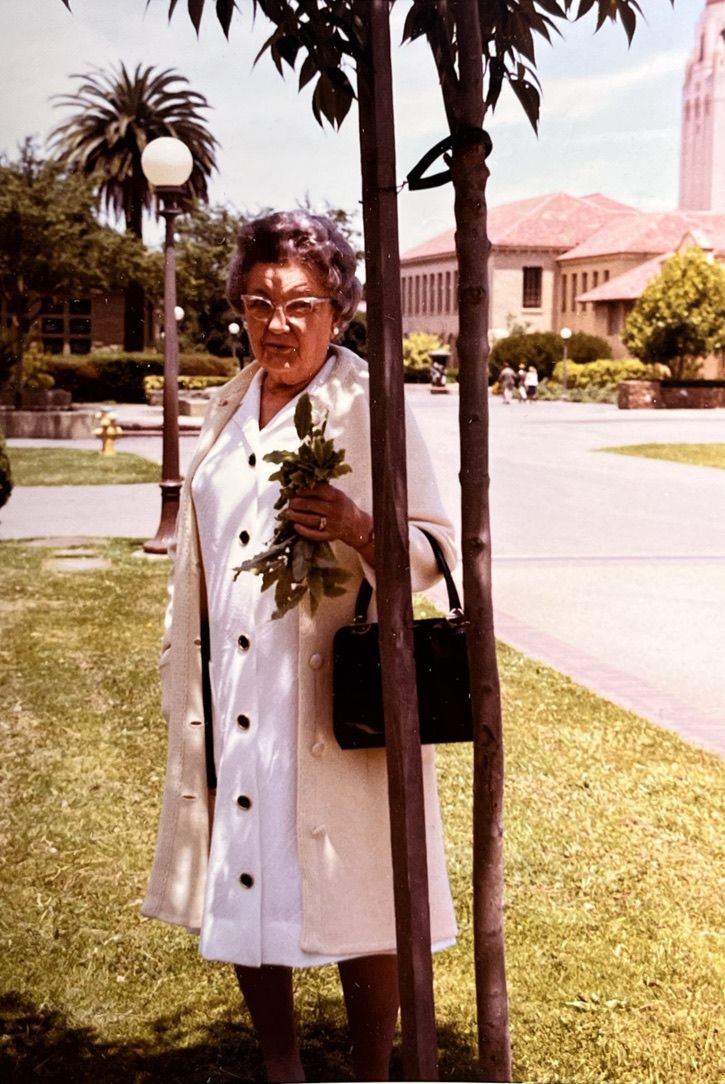
Evelyn Best at Stanford University for her grandson's graduation. 1970.
IV. Alameda, 1946
In WWII, the US Merchant Marines delivered troops, ammunition, equipment, mail, food, medical supplies, and raw materials to the European and Pacific theaters. Slow, unarmed cargo ships were particularly vulnerable to mines and aircraft attack; the Merchant Marines, though a civilian body, suffered higher casualty rates than any other branch of the military. Many crewmembers were as young as 16.
My grandfather, Ken, was a radio operator in the Merchant Marines. While home on leave in 1945, he met a certain Betty Jane Carlson at church in Oakland, where she had been stationed as a medical secretary. He wrote to her thereafter from the Philippines, Panama, and Libya, and they married upon his discharge in 1947. She saved his love letters in her black Army Air Corp suitcase.
Ken’s convoy was never attacked, though I suspect he would have welcomed that respite from inactivity, seasickness, and heartache.
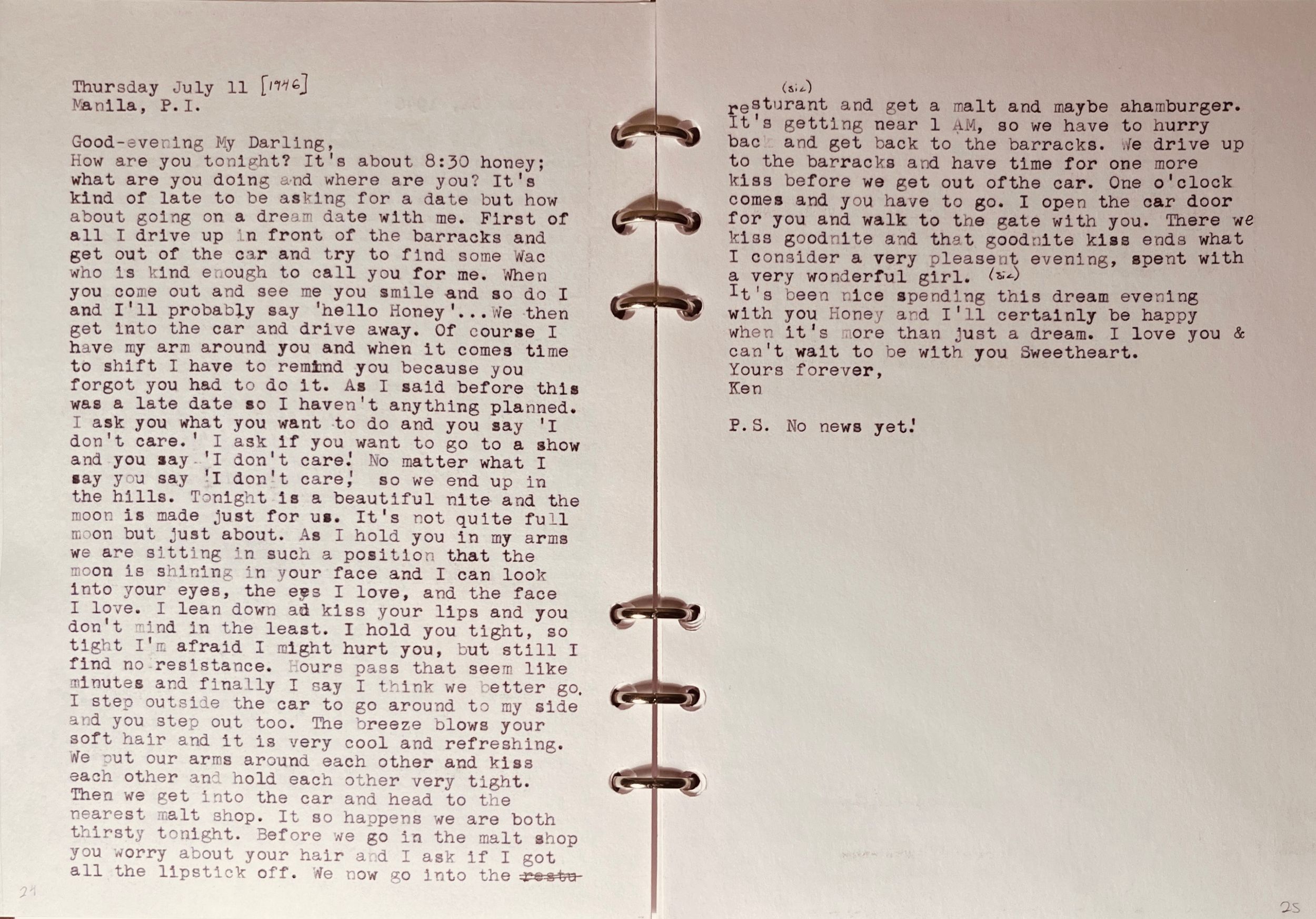
Copy of a 1946 love letter from Ken Best to Betty Jane Carlson.
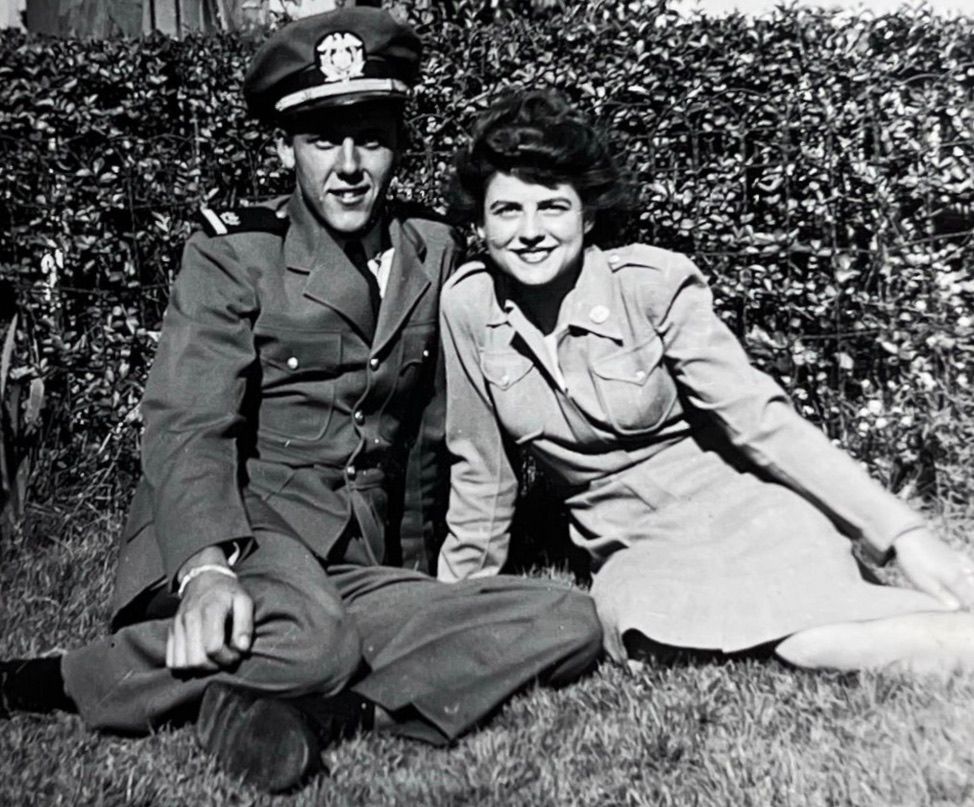
Ken Best and Betty Jane Carlson. Late 1940s.
More than Just a Dream
From a bunk below deck
off shore of Manila
in the wide waiting
of a silent sea
in times of war,
a boy wrote his love.
He wrote a dream into being:
the dream of a slow drive over dark hills
like the evenings he'd shared with her before,
but urgent now with longing
for peace and home and the girl he loved.
To find a place above the city lights'
reflection in the Bay,
above the oaks and manzanita shrubs,
beneath the moonlight
in the breezes from the sea –
such lovers' thoughts
did not come first to the flower children
of later years.
The California dream is old.
The dream begins with the longing set between a woman and a man,
then for the hills to place their feet upon,
and the freedom and the road to go that way together.
Later come the daily business matters
and the roots of long establishment.
These solid things are good, too,
are perhaps the best.
But what first made California,
and what makes it still,
is the lovers' legend.
Most all who came out west
by wagon or by train,
by highway or by plane,
or by a dream-date draft
written from a ship in the Pacific,
came not for certainty or ease.
We came by ache
and by desire.
It is by my longing
first kissed awake on these hills above the Bay
that I know this to be so.
The California dream is old,
older than my grandfather's first love,
but fresh, strong, eager
also as my own.
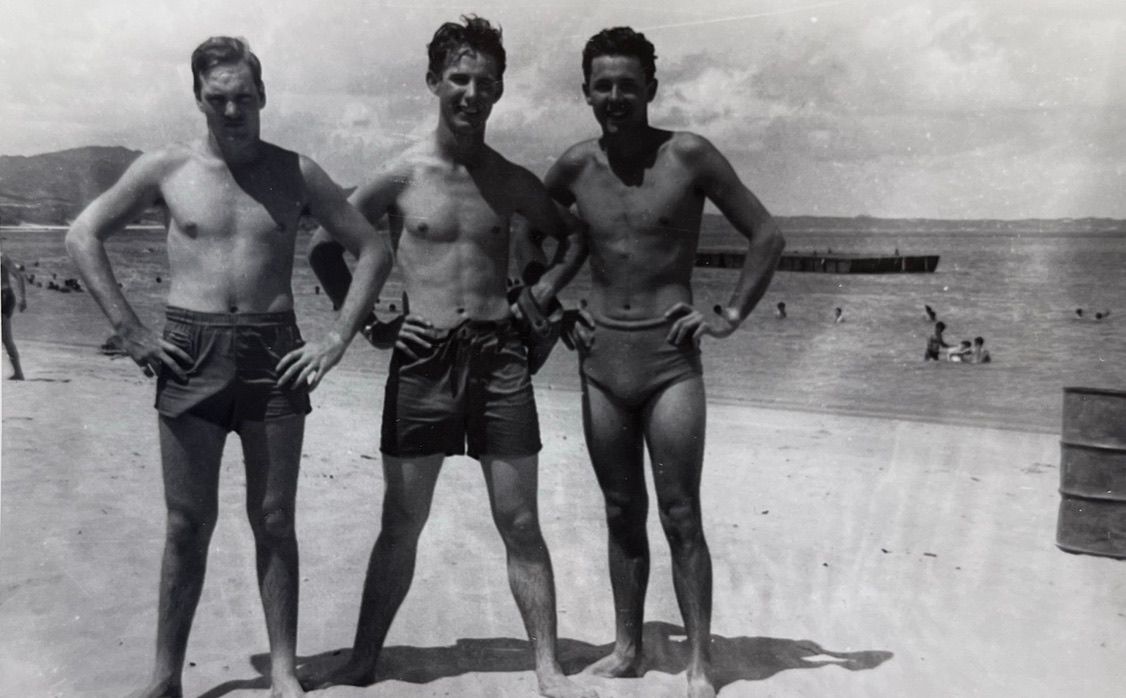
Kenneth Best, far right, in the Philippines. Ca. 1945.
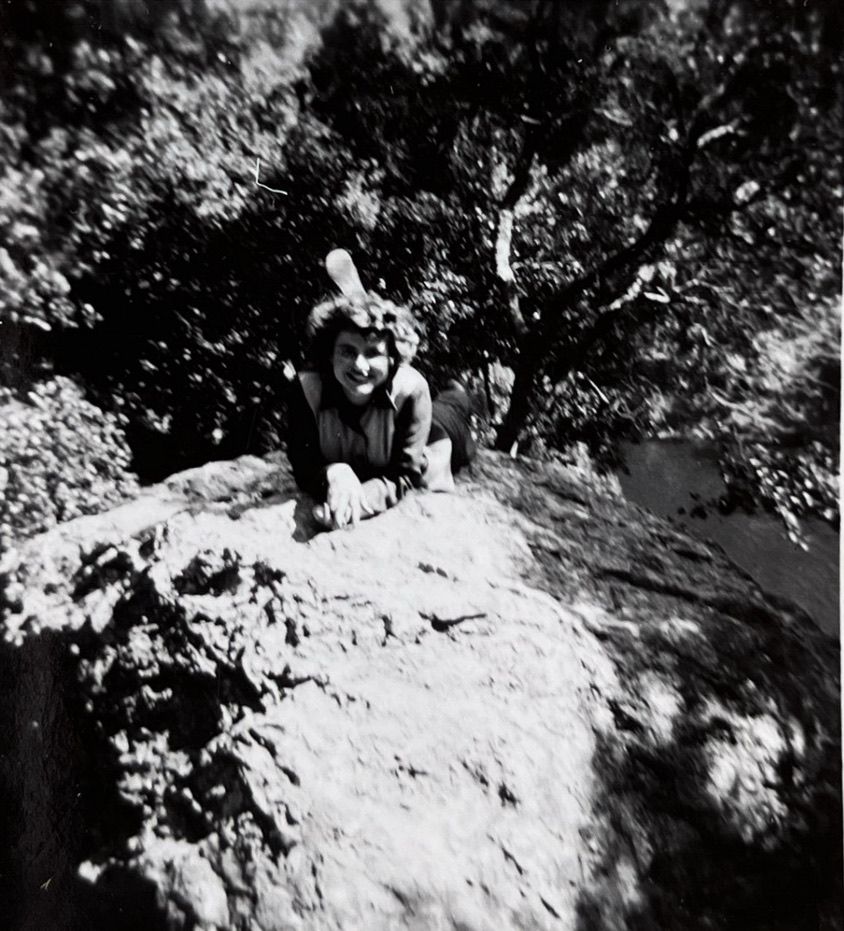
Betty Jane Carlson. Late 1940s.
V. Oakland, 1970
The sixties were a freeing time, it’s said, a time of casting off restraint; a time also of fresh justice, of equality for folks in the shadows. As the cultural center of gravity shifted, though, from the venerable to the young, California tilted, rocked, and nearly rifted. The students feared a federal government that would send them to Vietnam. The elderly feared a state government that would tax them out of their homes.
Ken and Betty Best moved their family from Oakland to Walnut Creek in 1971, disturbed by the urban unrest. They must have felt that the ground was changing under their feet, and changing their children too. Their eldest son attended Stanford at the peak of its Vietnam protests. Their next son, Kevin, declared that if drafted he’d move to Canada; to which Ken replied that if a son of his dodged the draft, he would enlist himself.
There’s a story, which I’m sure his father never heard, of Kevin and a few 30-something-year-old friends driving down Highway 1 in a rented motorhome, while my mother, aged 18, rode on the roof.
The Bests were always wild, but they were very proper too. The sixties did not only divide California’s free spirits from its salt of the earth. It found out, also, a divide running through my grandmother and my mother and through my own soul also: a divorce (or could it be a marriage?) between utter freedom and tangible uprightness.
By 1984, my mother, Kimberley, had attended five different colleges. She transferred again to the University of Denver, running, she says, from God, she says. After business school she followed work to DC, married, and remained there for seventeen years. But in 2004, our family of six moved back to Colorado, the one place her soul had settled years before.
Apart from the month when her mother passed away, my mama never again lived in California.
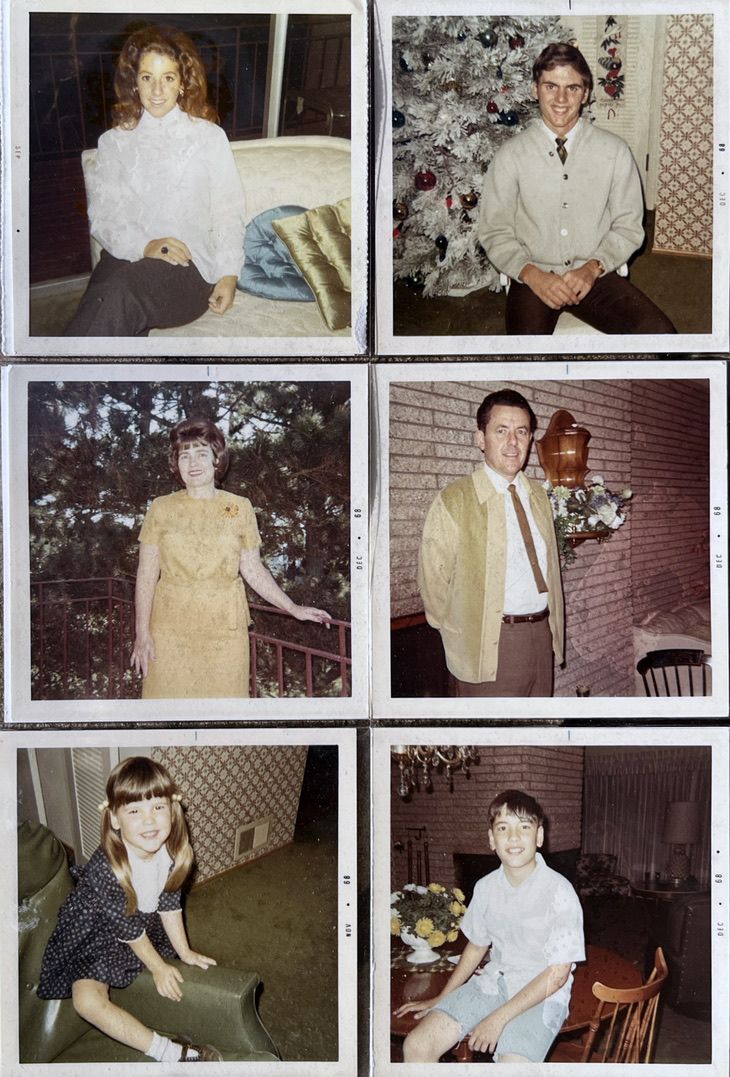
Clockwise from top left: Kathryn, Greg, Kevin, Kimmie, and Betty Best. 1970.
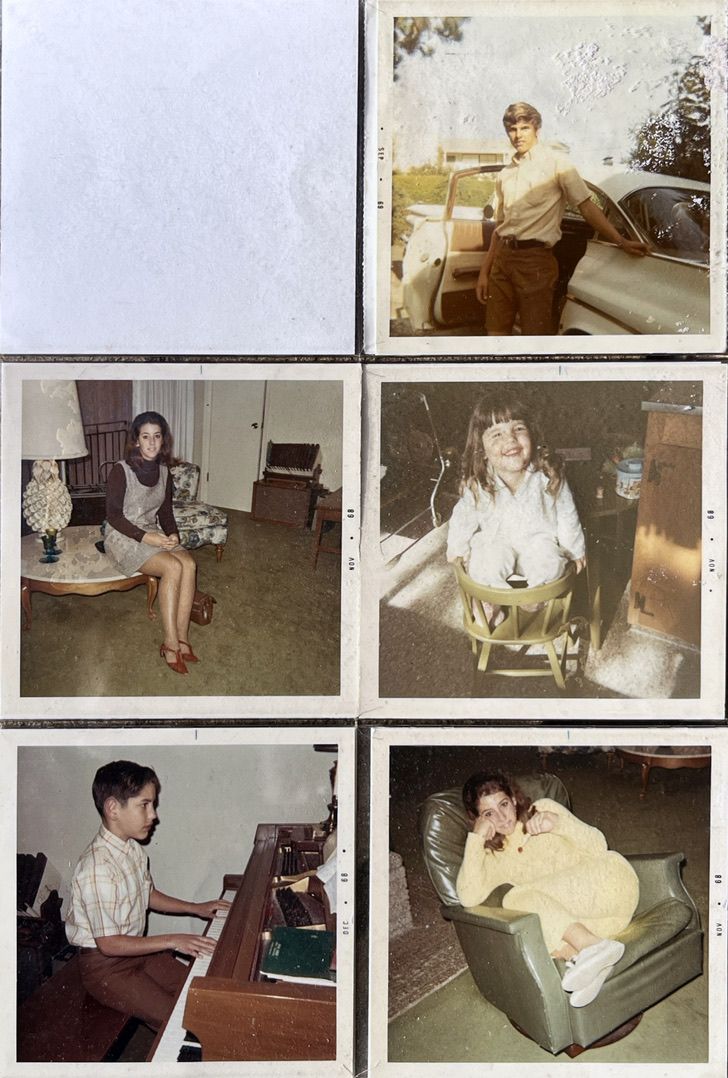
Clockwise from top right: Greg, Kimmie, Kathryn, Kevin, Kathryn.
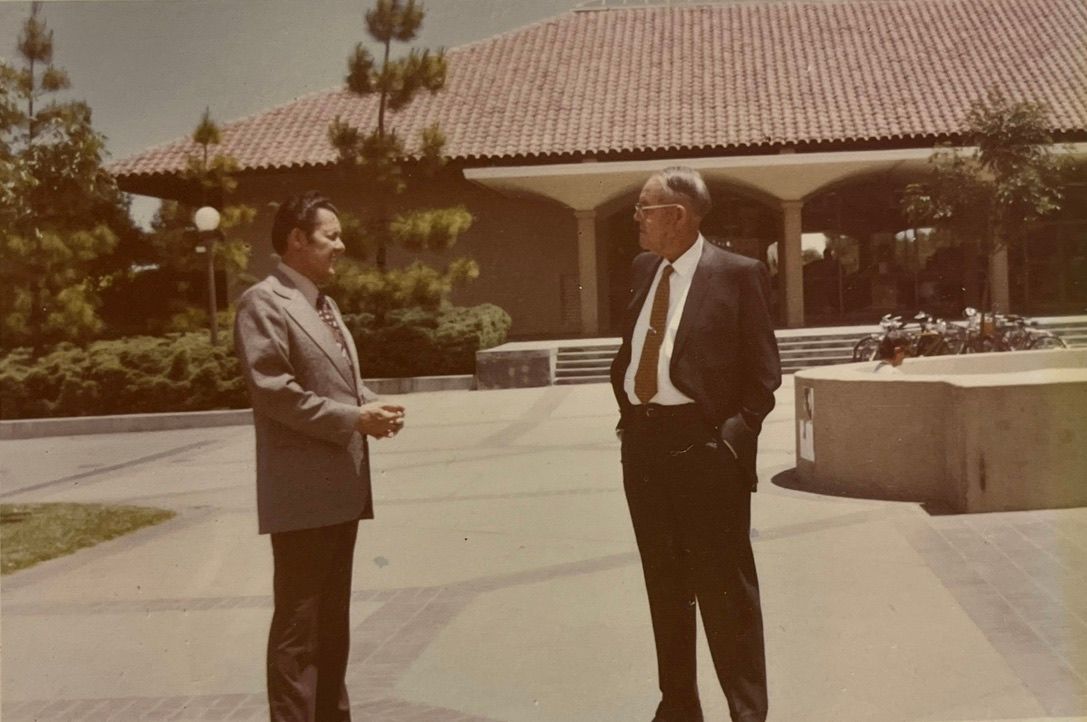
Kenneth and Harold Best at Stanford University. 1970.
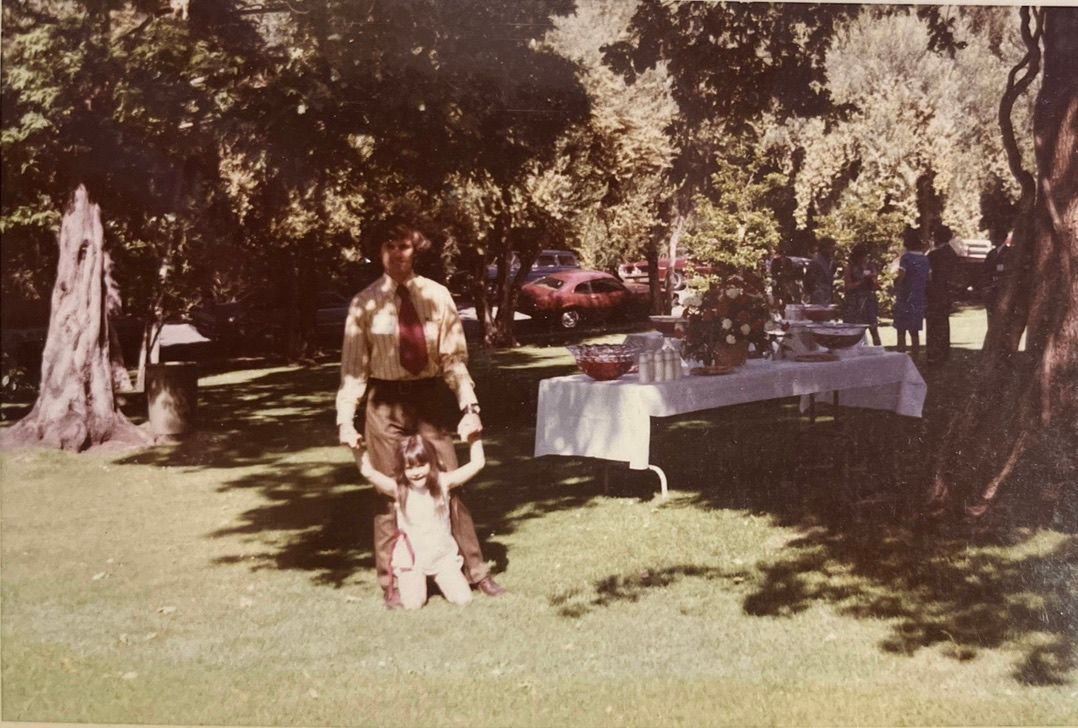
Greg and Kimmie Best at Stanford for his graduation. 1970.
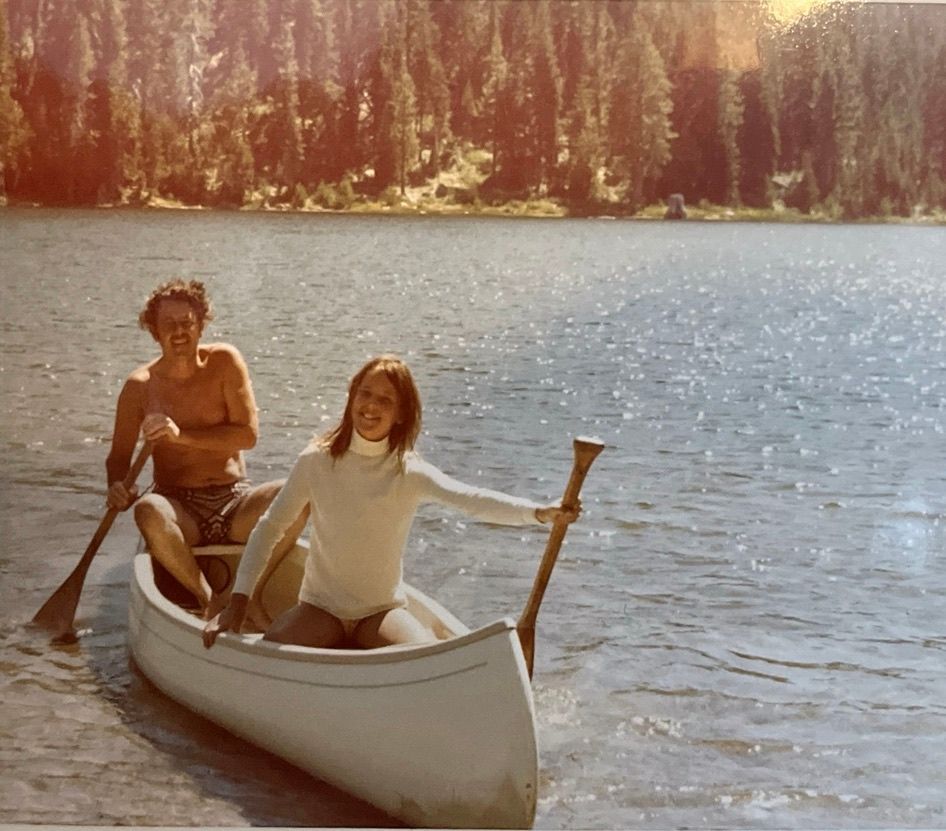
Ken and Kim Best, possibly at Wright's Lake. Late 1970s.
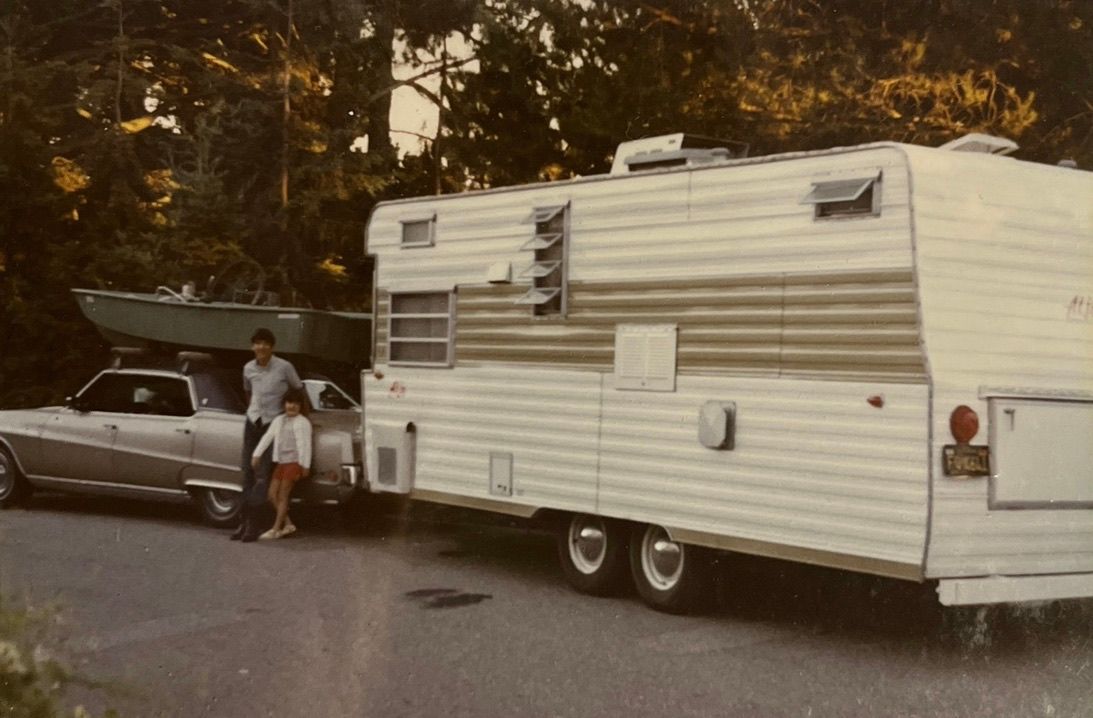
Kevin and Kim Best. Early 1970s.
When California and it Dream Diverge
Not in a generation but in a year,
indeed within each day of my mother's childhood,
California's vision of itself fragmented.
Something pioneering still remained.
But the world went a little crazy
in the sixties, so my mama says.
It wasn't just the hippies,
not race or Vietnam,
but also a sickness of the soul
that sweat into the suburb streets.
Kathryn in her curls, Kevin upright at the keys,
Greg driving off to Stanford in a shiny pearl-white car––
was it for this pretty primness
that a man had fought a war
and a woman waited through it,
that together they had built a home and a livelihood
up from the deadpan ground?
Something wild had gone,
if not from the family,
then out of the East Bay hills.
The state had left its childhood.
When the Bests went camping, of course,
the sweet, neat wildness still showed.
Nonie forbade a child their sleeping bag
til they'd bathed in sharp creek-water
under a sunset sky,
and naptime was hard as a Swedish will.
Yet the babies slept to river-sounds
where she’d left the crib midstream.
Four decades on, with four children of her own,
my mama had a choice to move
from East Coast clouds to anywhere she pleased:
to East Bay pleasantness
or deep, wide Colorado skies.
She chose, against her mother's hope,
for Denver, for the sky.
I asked her why, this week,
while she prepped the coffee
and I scrubbed the dinner dishes in her sink.
'It was for you,' she said:
'to let you be a child
where the mountains are more near
than that Bay Area watchfulness
of performance and wealth
and a girl's body in the sun.
'We chose the state where you’d return,' she said,
'where the prices and the crowds
would not root you up full-grown.
And though dutifulness
inclined me toward my parents in their age,
duty most eternal
said to go where I could be alive.'
My mama is a woman to follow quick love,
but she's far-seeing, too,
and she made a wise bet
that the peace and delight of bright mountain streams
would draw her four children nearby to her.
We've left Colorado, each of us,
and all returned,
for a love of the wild
proves stronger than states
that change with the years.
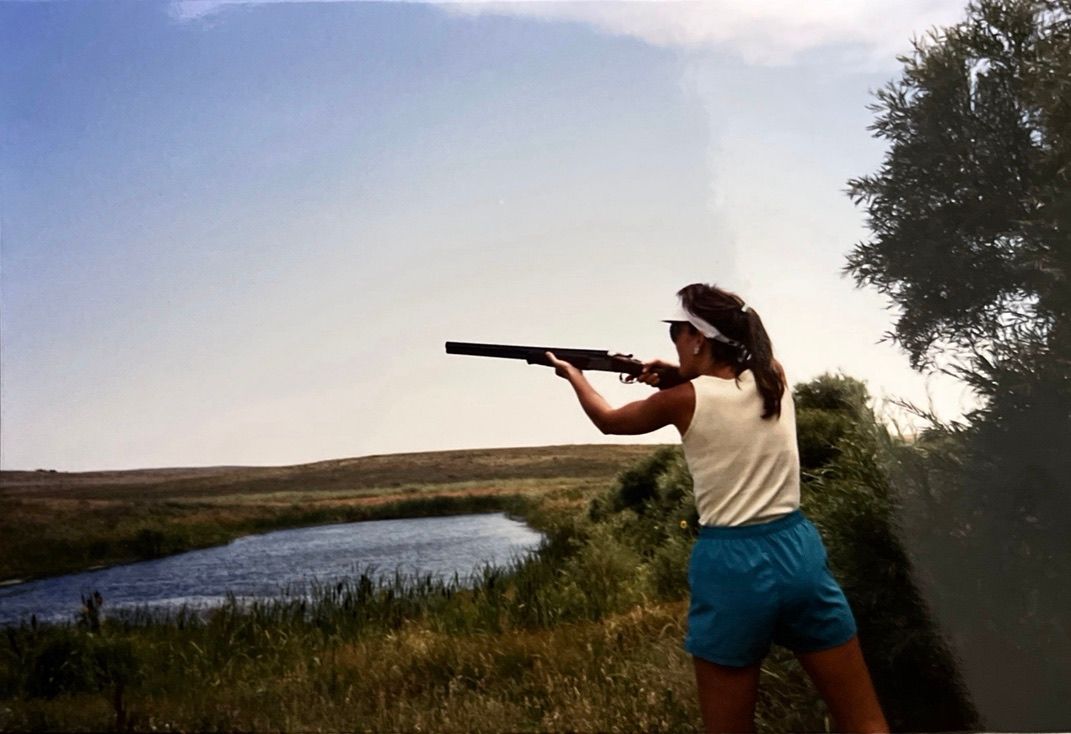
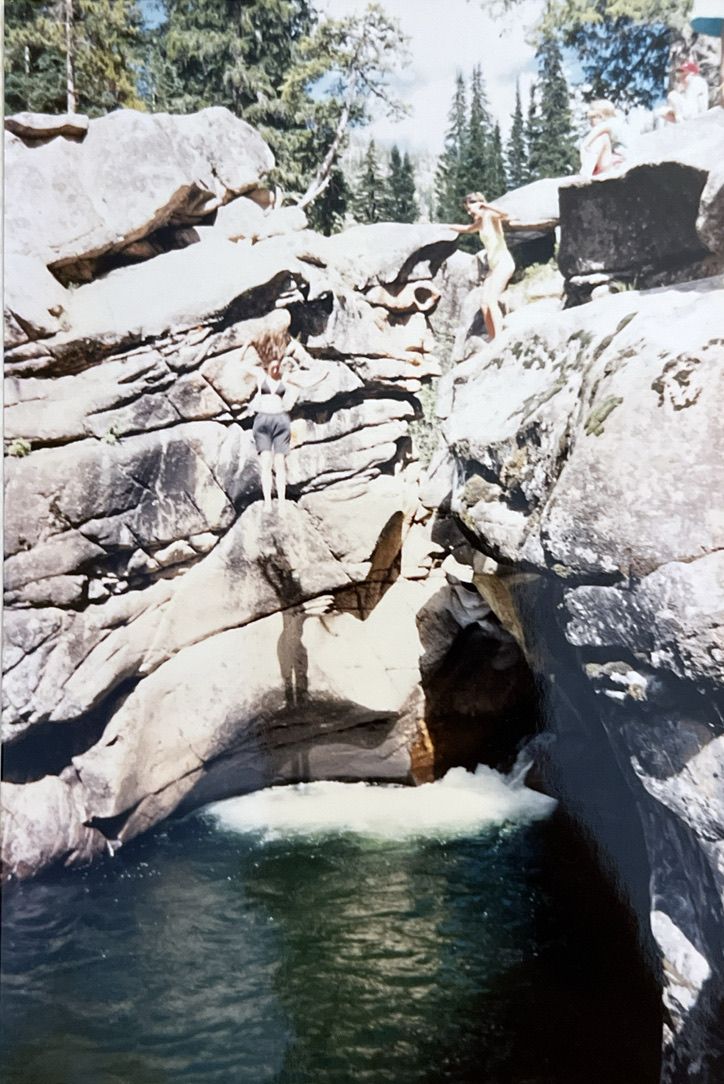
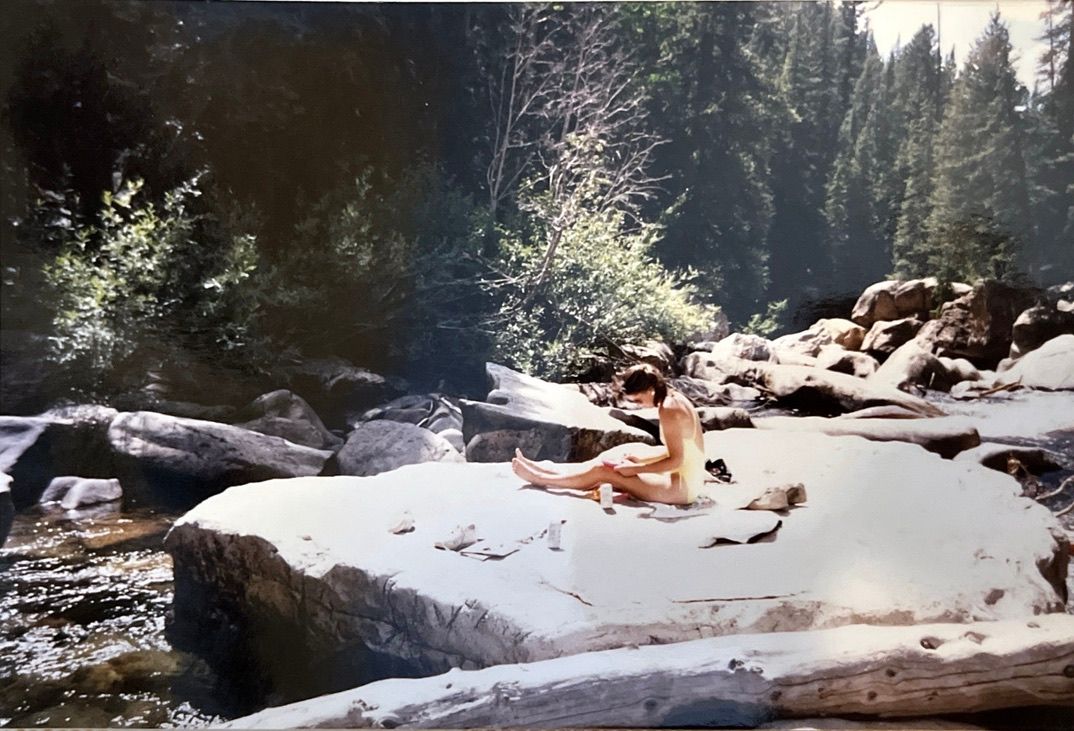
Kim Best, Colorado. Mid-1980's
VI. Mojave Desert, 2023
My brother Samuel attended college in Santa Barbara not to return to his California roots or to remain, but for the sake of sunshine and a school he loved. Sometimes, though, he catches a breath of the California dream – there’s something enterprising in the air, he says.
The longings for wildness and a well-known place, for roots and room to explore, for boundless potential and familiarity too, are the desires that drew our ancestors to California. These things brought Samuel and me here as well, but they may also drive us away.
Just before Samuel graduated from Westmont College, I wrote him the following poem.
From College
Do you remember returning home
that first time? You came back with softness
and the purposefulness of a gentle man––
with a delicate pride in your faith,
like that of a shoot
which knows it will grow large.
You spoke fuller to dad
and hugged me sideways and love-assured,
and the smile came eagerly to your eyes.
But that summer some girl dropped
your affection carelessly.
Your soul turned and tangled
so I can't tell just now
if you've a heart of velvet or of steel.
Sometimes you bristle, but then my heart drops
when I see your aspirations grist inside.
And you have been hard pressed, these months,
between dad's overbearings and the surfers' casual smiles,
between the welcome of that lariat on your desk
and the round surety of California real estate.
But whatever work you grasp—
you hold nothing worthy loosely—
wherever you call home,
will you set your heart in order?
When you have put your strength
into a dance with fondnesses,
when you wear your belief again
like an easy smile beneath a felt brim hat,
like an old hand lifted in a wood-walled church,
then come back to cradle a coffee with me.
Because I was quiet, coming back home.
My deepenings hid themselves over
Like a well afraid of being bucketed out.
I didn't wear the joy I found—or the longings either—
so deep and broad as your embrace
when you first came back home.
So when I see you on the beach
would you walk me to the cairn of stones
again, to watch the reckonings of the waves with one another?
There we'll learn how the ruckus smooths
into soft mosaics of foam,
and we'll pry away the rotten old boards
and we'll speak of the longings.
After his graduation, Samuel drove to a high valley in the Rockies and became a cowboy. We do not always speak of our longings, and he's as full of bristles these days as ever, but when I saw him next in Colorado, he sang a song about that drive.
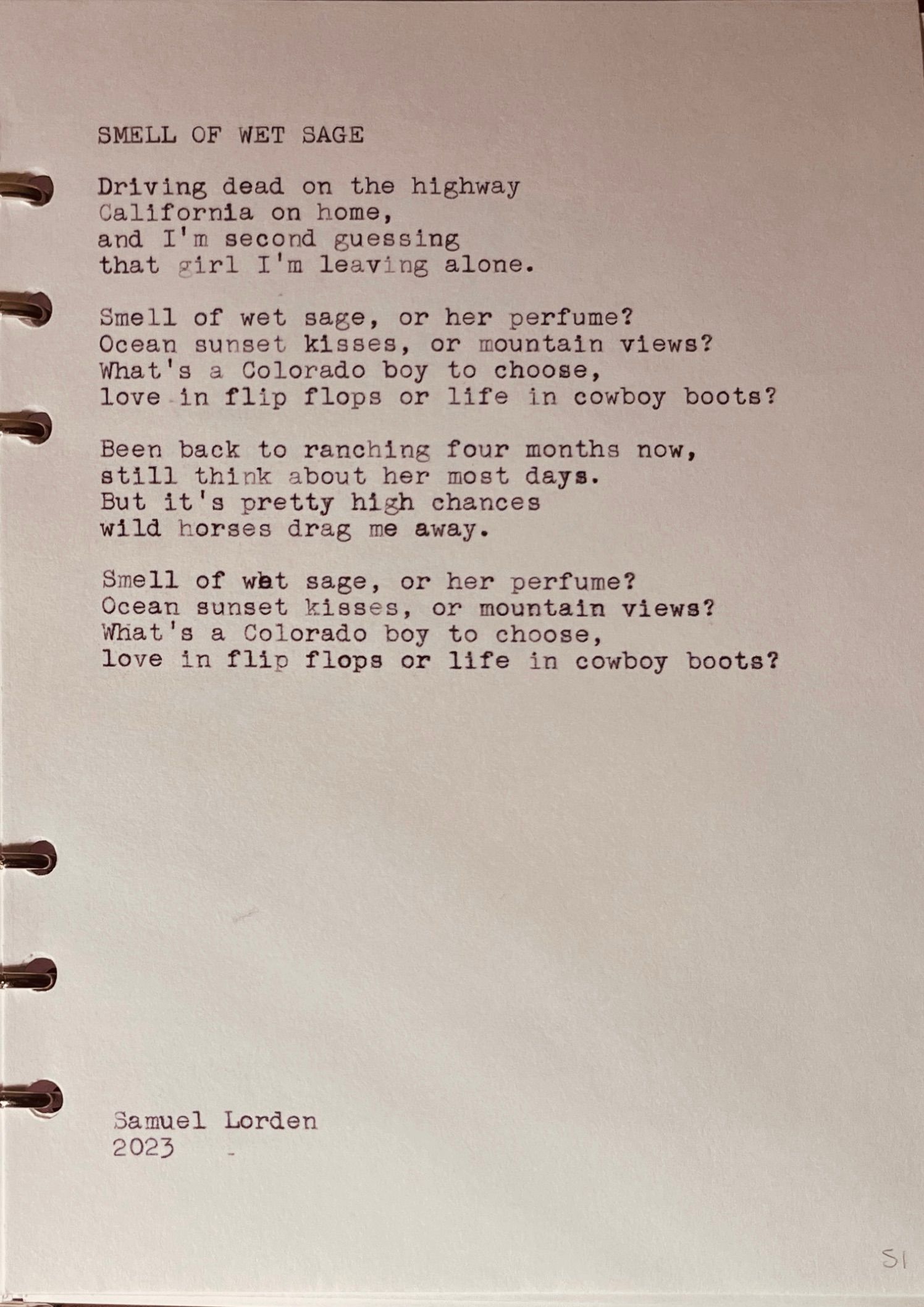
Copy of a song written by Samuel Lorden while a cowboy in Salida, Colorado
I know, I understand, his yearning for silent sunsets and storm-washed sage. As I had followed him to California for college, as I had scrambled after him up every rock as a child, so I also found myself back in the Rockies as a cowgirl last year. And this year I, also, kissed someone goodbye because I loved Colorado too much.
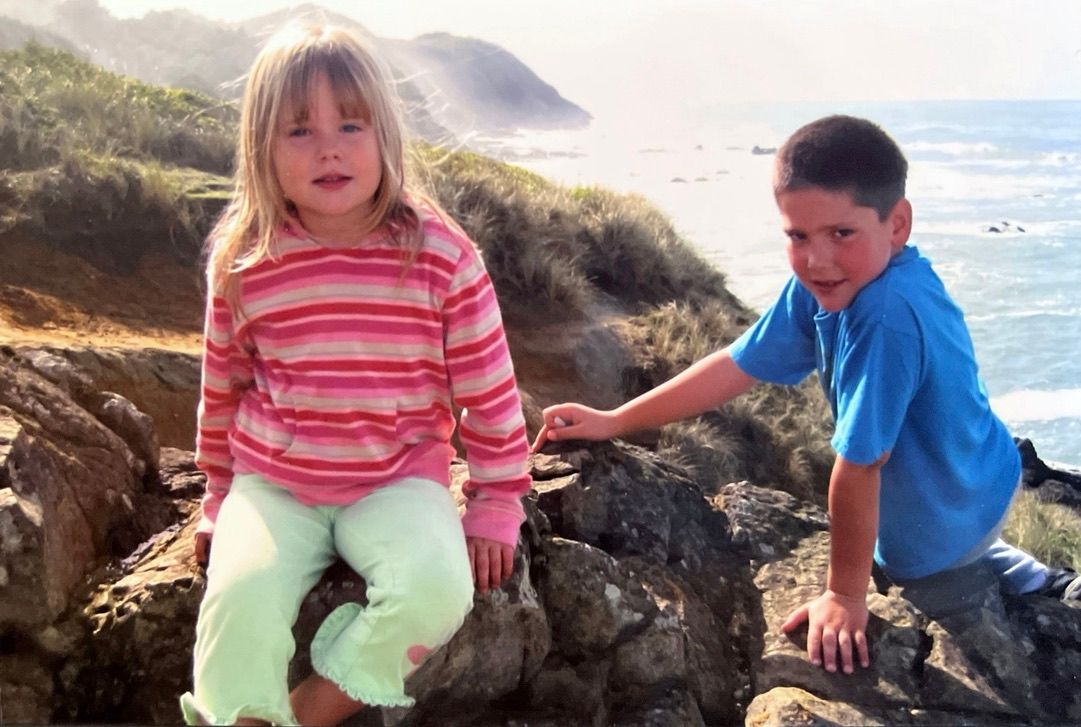
Bethany and Samuel Lorden on the California coastline. 2008.
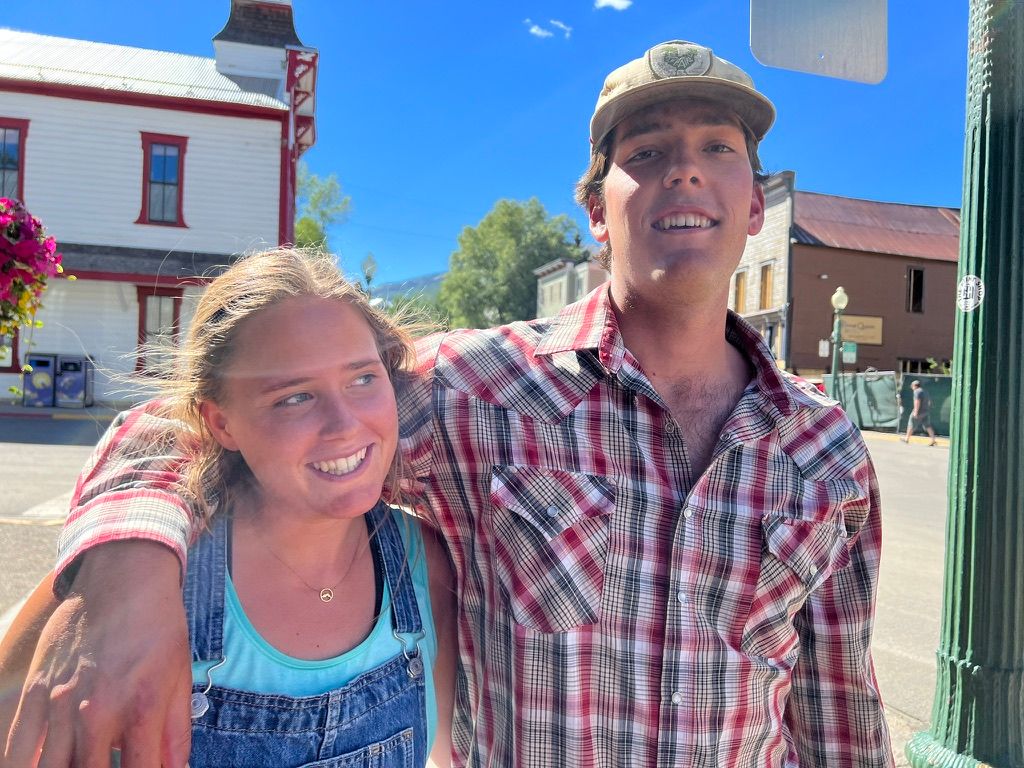
The same, in Crested Butte, CO. 2023.
VII. Stanford, 2026
In the box with the orange grove deed
and discharge documents from the First World War,
I found a packet of my grandmother’s prayers.
Long preceding me, and until her death,
I found, she prayed “for Kim and hers.”
If hospitality, as my mama says,
is to think of another ahead of time,
then I have been well hosted.
I have been hosted in the forethought
of grandparents whose labor
paid for my Stanford degree.
I have been welcomed around family camping tables,
where in 1866 and 2006 alike
mothers have taught their daughters
to make rough places lovely with a wildflower bouquet.
Like the many who preceded me
I have been a guest, over these college years, at Mt. Hermon;
have swam in the Pacific and the Bay;
have driven Central Valley highways;
have explored Yosemite trails and the wooded Tahoe hills.
Frank Best was not the only one of the family
to build a road through a desert place.
Each, through wars and depressions and changing times,
beat for me a path of faithfulness
and of faith.
Yes, I have been well hosted here,
not only by the prayers and paths
of those who went before me
but in their hopes,
hopes which I take as my own.
May I also teach, love,
love children into being,
love my place and make it flourish,
camp and sing hymns of worship around the fire.
May my granddaughters find
that prayers and faithfulness
are their inheritance
as they have been mine,
and that these things compound
over the years.